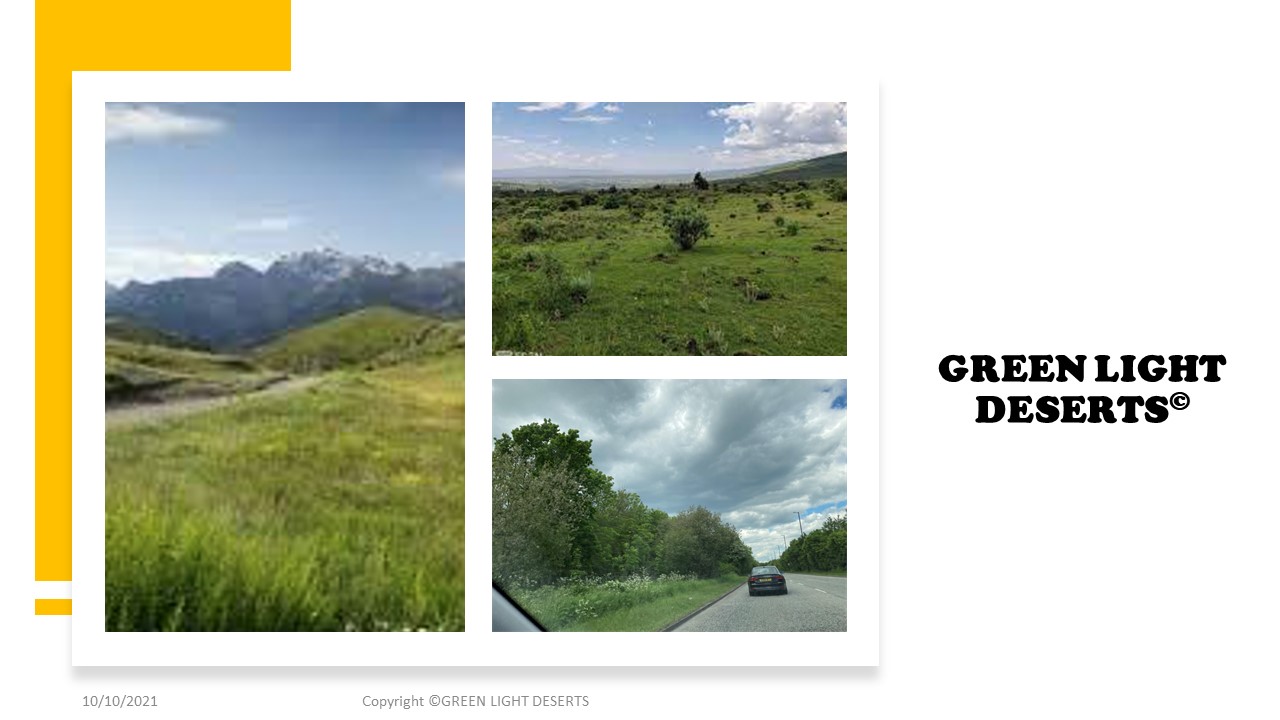
Forest melioration of deserts will create carbon sinks, soften and humidify the extreme dry climates, eliminate dust from the atmosphere. Trees will bring water to deserts by activating the water cycle, that is, by mining water from deep aquifers through their roots and transpiration through their leaves. Livelihoods of communities will improve through reclamation of ameliorated lands from DESERTS. Artesian wells with thermal solar powered water pumps linked to capillary irrigation systems will help people borrow water from the Nature’s well kept reserves to give it back to the Nature by replenishing them. Well established forests – urban, rural, mountainous – will turn into precipitation factories, producing fogs, clouds, rains. In fact, forestation of deserts works well as an offset mechanism for emission and sequestration of CO2 within the same country helping neutralize the toxic emissions, which were not stopped by filters.
Now the COP26 Climate Change Conference in Glasgow became a matter of the recent past. Uzbekistan upgraded its Intended Nationally Determined Contributions (INDC) to reduce greenhouse gas emissions per unit of GDP by 35% (instead of the previously envisaged 10%) by 2030 from the 2010 level. The main contributors to greenhouse emissions are energy industry — 76.3% and agriculture — 17.8%. It was documented in COP26 proceedings that by 2030, Uzbekistan pledges to increase its renewable energy output by 25% from the total energy output.
Even if the dust storms and sandstorms originate from areas of the country other than the Aral Sea basin, they create immense hazards for public health. The most recent dust storm, which took place in November 2021, caused 678 emergency calls just in one night of 4th November in Tashkent with complaints of suffocation and breathing difficulties as reported by the Ministry of healthcare. According to World Meteorological Organization, dust and sandstorms are atmospheric phenomena hazardous for health as there is no harmless level, at which the presence of dust and sand in the atmosphere is acceptable.
Dust particles irritate the respiratory tract and can cause or worsen conditions such as bronchitis, emphysema, cardiovascular disease (such as stroke), eye infections, skin irritation, and meningococcal meningitis. In addition, they can lead to death and injury from reduced visibility and road traffic accidents. In social media, almost 100% of comments were related to the relentless cutting of trees, which left people defenceless against increased levels of dust in the atmosphere, and more frequent sand and dust storms. And although the Ministry of Innovation reported that heavy metals, salt, or pesticides were not found in the samples of dust and sand taken from the atmosphere during the storm, the public was not convinced. Apparently, alternative public monitoring and supervision mechanisms should be installed to raise the level of trust and awareness in the society on such important issues.[1] Hydrometeorologists communicated their concerns that dust and sandstorms are caused by the flight of the dried top level of soil into the atmosphere, which was caused by the lack of green cover of the soil.[2]
It is a well-researched fact that trees, if planted close together in a continuous patch, can cool temperatures by 5-10°C. [3] This is a vital ecosystem service not only for urban areas but for all terrains of Uzbekistan. The ability of trees to mine water from deep aquifers and put it into an active water cycle has the capacity to humidify the climate and eventually create the needed water resources. This will help provide not only food security but also contribute to a political stability in the region of Central Asia where countries have tensions around the usage of water resources unevenly distributed between them by the nature. [4]
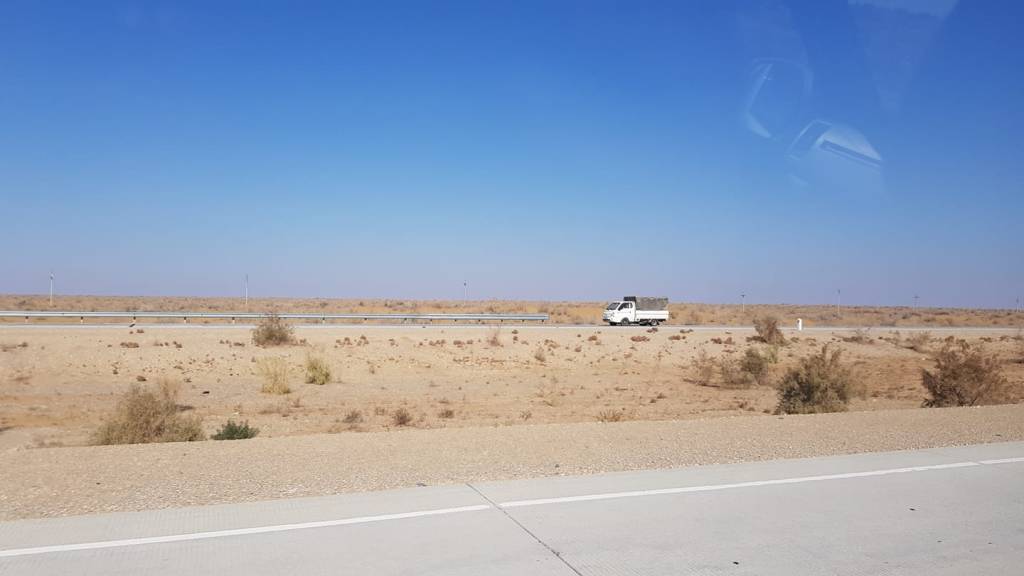
More than 85% of 448,978 sq. km of the total territory of Uzbekistan are occupied by deserts[5]. There are millions of tons of deep ground water and even fossil water[6] deep under the sands of the deserts. And while not all of that water is suitable for human consumption, it can be ideal for growing trees.[7]
This situation offers opportunities to address climate change in Uzbekistan and obtain funding for it:
- The application of the principle of carbon offset mechanism[8] of the CO2 production and sequestration within the country substantiates the large-scale forestation and afforestation of open spaces using aerial seedball planting of endemic trees and other vegetation.
It certainly takes several decades to grow an adult tree for the maximum activation of its CO2 sequestration ability. However, the action of aerial planting of seeds in seedballs can be done in a relatively short period of time because seedball planting is possible round the year.
- There are rich water resources trapped in deep aquifers under the deserts and the rest of the territory of Uzbekistan. Not all of that water is suitable for drinking even after special treatment, but it is quite wholesome for trees. These water resources can be “borrowed”, or taken from the natural resources temporarily, until the trees establish their own uptake of water through the radical roots. This is possible to implement by means of the artesian wells equipped with solar powered pumps with water distributed through capillary irrigation system. When the ‘radical roots’ of trees reach the deep-water aquifers and start ‘pumping’ water for their growth on their own, the solar panels can be diverted to different purposes locally. Even young trees can start humidifying the atmosphere through water transpiration. Root uptake of water is between a few hundred to thousands of litres per day depending on the breed [9]. There is a direct relationship between the capacity of trees to uptake water from deep aquifers and the amount of water they transpire into the atmosphere to humidify it. And in the process, they sequester carbon, as we know.
- High evaporation and large extent of natural forests guarantee both a stable and intensive hydrological cycle. Therefore, sustaining natural forests is a sound strategy for water security and climate stabilisation. [10] Trees uptake 200 litres of water on average daily and transpire 95% of it. Precipitation is usually expressed as an equivalent depth of water in mm across the land surface. The addition or loss of 1 mm of water to/from an area of 1 sq. m of ground is equivalent to a total volume of 1 litre. Similarly, 1 mm of rainfall or evaporation to/from 1 ha is equivalent to 10 m3 or 10 000 litres of water. There is considerable spatial variation in precipitation levels. Many western areas of Uzbekistan receive less than 100 millimeters (mm) of precipitation per year, whereas parts of the east and south-east can receive up to 800-900 mm per year.[11] Although some sources only indicate the lower amounts of precipitation. [12] The globally averaged annual precipitation over land is 715 mm[13] . For comparison, annual precipitation in Brazil is 1,000–1,800 mm; in Switzerland it is between 812mm and 2,387mm. [14]
If 85% of the territory of Uzbekistan, or 381,631 sq. km, is deserts and semi-deserts, then the area available for forestation should be roughly 400,000 sq. km out of 448,978 sq. km. This includes urban areas, which also need more trees.
400,000 sq. km/9 sq m[15] = 44,444*1 million trees. That is, 44,444,000,000 trees. Let’s round it off to 45.5 billion trees. This number of trees grown in areas, which currently experience severe shortage of surface water will increase naturally induced precipitation of 200 mm – increasing the current precipitation amount of 100 mm to 300 mm. The precipitation can be experienced in the form of rain and fog, increasing the water content in the air.
If each tree uptakes 200 litres of water on average, and then emits it into atmosphere through transpiration, there will be an additional 200 mm of precipitation in the deserts of Uzbekistan where precipitation is currently 100–200 mm per year.[16]
To plant enough trees to create a significant carbon sink and enough to humidify the air, Uzbekistan needs to plant 45.5 billion trees using the capillary irrigation from artesian wells.
Groves and forests will generate fogs and precipitation thus humidifying and softening the climate, eliminating dust, holding soil with their roots, protecting organic soil carbon from erosion, preventing dust storms. It will take longer for seasonal bodies of water to evaporate; forest amelioration will activate water cycle thus ending the water scarcity and extreme dry soil and air conditions; will help reclaim land from deserts, will allow for the development of permaculture, fruit forests, maintain and increase the bee population, propagate biodiversity giving life to insects, small mammals, and birds, which together create sustainable ecosystems. Improved grazing practices with regular frequent change of pastures will enhance the vegetation growth.
The first real positive changes for the climate will be felt within 5-10 years of planting forests. Land reclamation will thus strengthen food security of the country enabling to introduce new agricultural methods, new wholesome agricultural produce for domestic consumption and expert, such as honey, fruit, vegetables, and grains, provide forage for the cattle.
- In a wider context, water security will lead to a stronger peace, accord, cooperation, and political stability in the region of Central Asia and
- A network of artesian wells will be built with solar powered thermal pumps linked to the capillary irrigation system. The capillary irrigation system will be linked to the maintenance network by means of the electronic monitoring system to maintain low pressure, signal if repairs are needed.
- Production, repairs, disposal, and recycling of the solar energy equipment components will be created based on the circular economy principles.
- Purchase, production, repairs, recycling, disposal of small agricultural aviation, drones for aerial planting of seedballs.
- Once trees are established the solar will be moved to increase the size of the forestation or used to light the ecotourism paths, permaculture farms, or by local farmers to power their homes and provide water – they will not be going to waste.
- A system of seed collection and production of seedballs will be created.
- Localisation of the known low-tech, cost-effective water saving innovations is necessary to produce local analogues at a commercial scale at a fraction of the price such equipment is called and shipped from abroad. To name but a few, water harvesting towers and nets, and water condensation devices.
- Organization of community-based forestry cooperatives for collecting seeds of endemic plants and making seedballs, if necessary, organizing seed farms to obtain seeds with the subsequent production of seedballs for the domestic and regional markets of Central Asia, since there are many deserts in Uzbekistan, Kazakhstan, Turkmenistan, and semi-deserts of various scale.
- All terrains and regions of Uzbekistan will benefit from different types of forestations with:
– urban forests in urban areas,
– rural forestation in rural areas, including alley cropping across irrigated agricultural plantations in the valleys,
– tugai and deciduous forests in deserts, semi-deserts, steppes,
– forestation of mountainous terrain.
- The development of science and education in the context of afforestation in Uzbekistan is receiving a new impetus. Creation of an online university on climate change, digital technologies, and transformational entrepreneurship and a foundation programme
- Creation of research and production seed companies for the production of seeds of endemic trees and other plants for forest plantations in Uzbekistan and the Central Asian region.
- The rise of solar energy industry due to the need to equip artesian wells with solar-powered pumps for drip irrigation systems.
- Development of transformational entrepreneurship, including cooperatives for the collection of seeds of endemic trees and other plants and the production of earthen seed capsules for the domestic and regional market.
- Providing public support through active monitoring of the implementation of decisions of the President and the government on combating climate change, developing a “green” economy.
- Health benefits will be immense due to cleaner air and water, elimination of dust, amelioration of lands, propagation of wholesome agricultural methods such as permaculture, fruit forests, regular and frequent rotation of pastures, access to ecotourism for international and domestic tourists, etc.
- Revival of caring and responsible relationship with nature and environment as part of cultural heritage restoration as part of
Background and current situation
With a total territory of Uzbekistan 448,978 sq. km, more than 85%[17] is occupied by deserts and semi-deserts. It is these massive tracts of bare land that are the most significant sources of soil organic carbon (SOC) and СО2 emissions into the atmosphere compared to other sources due to sand dust storms[18] [19].
Droughts and scarce water supply lead to further desertification and dust storms, which have become more frequent in recent years. Currently, the dynamic of desertification is such that every minute quite a few square meters of land are added to the deserts in Uzbekistan.[20] Desertification in urban and agricultural areas is mainly manmade, which means it can be stopped and reversed. Dust, which raises into the air from desert and semi-desert soil settles in the lungs of people, in water, agricultural crops and all vegetation, dealing a lot of harm to the available resources and all people without exception even those who live in relatively comfortable urban conditions, let alone rural residents, especially those who live in the deserts, semi-deserts, steppe zones, and the Aral Sea basin. In addition to that, the glaciers storing freshwater reserves in the mountains of Tyan-Shan are melting too fast without sufficient natural replenishment due to climate change[21]. Also, the region of Central Asia will eventually face the consequences of the large-scale tree-cutting and wildfires in the taiga forests of Siberia, which are emitting tonnes of СО2 into the atmosphere in the form of tinder depletion, smoke, soot, and which are gradually leading to partial desertification of the places, which used to be forests.
However, it is necessary to note that the main source of СО2 rising into the atmosphere is the open soil, the ground that is deprived of its cover whether vegetational or other. Arable farming also leads to massive loss of the organic layer due to the flight of the carbon into the atmosphere because of the perennial root elimination.[22] Gusts of wind raise into the atmosphere billions of tonnes of organic carbon, which is the essential component of the soil. The degradation of soils from unsustainable agriculture and other development has released billions of tons of carbon into the atmosphere.[23]
The attention given to the climate change in the world and significant funding allocated to tackle climate change open opportunities for Uzbekistan to solve the abovementioned issues.
Based on the international practices and the national experience accumulated in Uzbekistan it was possible to develop and formulate a sustainable solution of the above-mentioned problems, which takes into consideration all aspects of the situation, such as an on-going desertification, water scarcity, air pollution, CO2 emissions, need for green jobs, green economy leading to a radical improvement of the situation in the foreseeable future.
National experience. Afforestation of the dried bottom of the Aral Sea as part of the action to mitigate the consequences of the environmental catastrophe is a good example of an enormous effort undertaken in a short period of time. It not only strives to catch up with the rapid pace of the climate change but also shows how much more needs to be done in the years to come. It is an excellent national pilot, which provides evidence-based results and lessons learnt opening avenues for scaling up the effort. In particular, the results of the aerial sowing method of the haloxylon plantations exceeded the outcomes of other methods by tens and hundreds of times proving to be much more cost-effective and less invasive for the soil, enabling faster and stronger growth of roots as compared to mechanical seeding or manual plantation of saplings in the sand furrows.[24]
International experience. Aerial sowing is very much in agreement with the method of afforestation in the so-called Green Belt of the Sahara Desert and other arid and semi-arid territories of Africa, India, and China. However, the aerial sowing in Africa and India is done with seed balls, or soil capsules with seeds of endemic trees, shrubs, and grass inside them. Since the ancient times, seedballs helped to protect future crops from birds and rodents and emulated enhanced natural conditions of growth for the seeds. Seedballs can be dropped onto the soil in any season of the year where they wait for the right temperature and a modest portion of precipitation to start growing up stems and putting down roots through the capillary ducts in the soil moving towards the deeper water aquifers. The composition of the soil for seedballs is very basic and may or may not include charcoal dusts, hummus, or other enriched protective mixtures.
Currently Uzbekistan is working on the National Climate Change Mitigation Strategy until 2030, which will add to other important government directives in line with international cooperation and economic development while addressing environmental challenges[25]. However, the key to the solution of the problem of ameliorating and restoring the climate, the air and water quality, and land resources is the large-scale forestation of the whole territory of Uzbekistan.
It is not surprising that Bhutan[26] and Suriname[27] – two countries in the world with negative CO2 emissions are entirely covered with forests. To retain the carbon neutrality while developing the economy, it is necessary to design the development in such a way that carbon, which is the most important and precious natural element of life, is kept in the right places[28].
Main goals and directions of the National Strategy of Forestation of Uzbekistan till 2030
The present strategy is based on the premise that
Trees are the main natural mechanism of CO2 sequestration,
and the most significant source of CO2 is open soil, from which СО2 is carried up into the atmosphere because soil not covered by vegetation is easily eroded. [29][30][31] Each component of the solution contains innovation that stems from the existing methods and international experience.
Global economic forum in 2020 acknowledge that the main СО2 sequestration equipment is trees, or rather forests, and launched a one trillion tree planting plan with the aim of helping the nature[32]. After that, countries of the world one after another started coming up with initiatives of massive afforestation to stop and reverse the rapid shrinkage of the forest cover of the planet due to tree cutting and forest fires. Out of six trillion of trees only three trillion are left altogether, thus everything possible should be done to curb tree cutting tendency and to replenish the forest resource of the planet, pledges the “trillion tree movement”.[33]
The climate summit scheduled for November 2021 in Scotland will focus attention on two priorities: reduction of СО2 (and other greenhouse gas) emissions into the atmosphere and foot security.
In anticipation of this global event, Uzbekistan undertook serious commitments in decarbonisation of the economy and reduction of greenhouse emissions.[34] And while greening activities are highly commendable, they are not sufficient for the solution of the problems listed above especially. Combining the economic growth with active afforestation would make a real difference.
Several African countries [35] and China[36] have started afforestation activities in deserts and semi-deserts long time ago. Since the start of the “Green Belt” movement initiated by Wangari Maathai in 1970s [37] over 51 million trees were planted in Kenya[38]. Nowadays Kenya is the largest exporter of seedballs in Africa. “Great Green Wall” project created a gigantic forest belt along the border of the Sahara Desert which will occupy 100 million hectares till 2030.
Uzbekistan in the context of international forestation and afforestation[39] initiatives.
According to the global report on target indicators of forest cover over 2021, monitoring is carried out on six forestation goals and countries launching significant initiatives include those which seemingly do not need additional forest areas, such as the United Kingdom, Thailand, Bhutan, Norway, Denmark, New Zealand, Canada and many others. [40] Unfortunately the forestation areas in these countries fall far way short of any meaningful contribution to the needed scale of СО2 sequestration carried out by forests. It is necessary to plant forests in the deserts and territories subject to desertification in the countries, where such large desert areas exist and stop tree-cutting activities altogether because it is the adult trees that sequester the СО2, not saplings. Tens of years will pass before currently planted forests turn into real forests, which will become СО2 sinks.
In view of the above, Uzbekistan will become one of the countries where forestation is carried out by modernised high-speed methods. To name but a few, India planted 220 million trees on one single day in 2019 in the state of Utta Pradesh. A record number of trees were planted in one day in Ethiopia – 353 million.[41] The fastest forestation leaders in Europe are Iceland, Ireland, and Spain. 240 million trees were planted and successfully grown in Israel, a country, which possesses 7 deserts. [42]
Among the tree planting methods in the Aralkum, a new desert in Uzbekistan, aerial seed sowing proved to produce the fastest and the most effective germination and growth of saplings as compared to other methods by hundreds of times.[43] This positive experience will be combined with the method of aerial sowing of seedballs of a variety of endemic trees, shrubs, and grass in accordance with the careful mapping of habitats across the whole territory of Uzbekistan, in the following categories:
– rural forestation, including alley cropping[44] forestation across irrigated agricultural plantations in the valleys,
– deserts, semi-deserts, steppes,
– forestation of mountainous terrain.
Such an innovative approach developed based on the existing experience is expected to bring impressive positive change for climate, economy, and food security of Uzbekistan.
The link between forestation and food security, forestation, and replenishment of water resources. In the deserts of Central Asia, on average, precipitation ranges from 100 millimetres (3.9 in) to 150 millimetres (5.9 in) annually, which means 100 to 150 litres per square meter, and this amount does not include the water, which is present in the air and can be obtained through condensation devices especially in elevations above sea level, such as hills and mountains.
This means that there is plenty of water in the deserts both in the atmosphere and in the deep ground aquifers and trees can help humans to bring these water resources into balance and improve the climate conditions, reclaiming lands from deserts. The ability of trees grown into forests to restore water cycle and produce significant precipitation has been well documented. Once the trees are grown into forests, they will have the ability to produce much evapotranspiration converted to fogs and rain. [45]
Currently, both in Uzbekistan and Kazakhstan, drilling of water wells to tap water from deep ground water table is widely spread. However, we claim that such usage of water wells is unsustainable as it does not envisage the replenishment of water resources.
The present strategy of forestation is aimed at borrowing water from drilled water wells where atmospheric water condensation technologies do not work, such as areas below sea level and flat areas. Water from deep drilled wells is pumped by means of thermal solar powered electric pumps is disseminated with the help of low-pressure soaker pipes, which is technically identified as capillary and not dripping irrigation, which means it is even more sparing than the dripping irrigation method.
Once trees are grown and the radical roots source water and nutrients from deep ground water aquifers, the irrigation system can be removed and solar panels re-oriented to feed the electric grid for the development of the area, such as provision of light and heat.
If in other regions of the world areal seedball planting has a high reliance on natural precipitation, in the situation of Uzbekistan additional safeguards will be taken to ensure that seedballs receive the necessary amount of water for the radical roots to reach the layer close enough to the ground water where roots can establish steady water supply for the independent growth of the tree. That period between the seedball falling on the ground and the germinated seeds reaching the size of the saplings and then saplings growing into independent trees capable of extracting water from deep down, will be bridged by an artificial water supply system based on several different low-tech and cost-effective solutions:
Low pressure capillary water supply system with solar battery powered pumps extracting water from the drilled artesian wells will provide water through a capillary system of pipes, not dripping but soaker pipes where water seeps through the tubes at a low pressure.
Non-irrigation technology based on water condensation will be localised and engineered for commercial scale production.[46] Fog harvesting technology is successfully used in very dry climates, such as Israel, Ethiopia, Oman, Eritrea, and others.[47] It will be used where artesian aquifers are not available.
In essence, this strategy has the potential to become a national idea, to revive traditions of a “nation of gardeners”, which historical states on the territory of Uzbekistan were famous for[48]. This strategy will enable the solution of the employment issue by creating “green jobs”, gradual amelioration of arid lands using the power of plants and trees, creation of the balance between deep ground aquifers and water table[49], and consequentially strengthen food security for the years to come.
Within the framework of the national project with the help of donors and investors, both international and national, a digital infrastructure of capillary wells, pumps powered by solar batteries, creation of digital monitoring of trees enabled by digital technologies[50] [51] [52] will improve the connection between urban forests and urban communities strengthening the sense of collective engagement and responsibility for the habitat. Digital technologies will bring together the public and science and technology companies of Uzbekistan for efficient seed collection as an income generation opportunity and seedball production as a profitable business turning forestation into a knowledge-intensive industry.
The role of the endemic biodiversity and multi-lateral dialogues in securing the sustainability of the national forestation strategy
Scientists are warning against potential danger of chasing forest plantation, which can lead to the appearance of monoculture plantations of alien, non-indigenous trees for specific regions, which cannot be called forests. Monoculture tree plantations are void of biodiversity and, therefore, are unsustainable and bear the negative consequences such as being vulnerable to diseases, forest fires, climate change adversities, evicting natural endemic vegetation and biodiversity. It is much more productive to operationalise[53] forestation from the point of restoration, conservation, and improvement of the habitat of local communities, preservation and strengthening their right to healthy environment and sustainable development.[54]
Operationalisation of forestation strategy will also bring a system of sound checks and balances between creating and maintaining habitat and commercial use of forest resources and help stop relentless cutting of trees where it brings rapid and irreversible damage to the air, soil and water while bringing immediate profit from selling timber and firewood.[55]
Forestation of deserts in Uzbekistan requires a multi-lateral dialogue process, which means the engagement of communities, which are mostly affected by desertification and have a vested interest in using the climate change initiatives to improve their livelihoods. For instance, Navoiy Province of Uzbekistan is located entirely in the Kyzylkum desert. Navoi province covers an area of 110800 sq. km, which is roughly one-third of the territory of the Kyzylkum desert (300,000 sq. km) [56]. It is located in the central north/northwestern part of the country. The Navoiy province borders on Kazakhstan, Samarqand Province, Buxoro Province, Jizzakh Province, and the Karakalpakstan Republic, where the Aralkum desert is located. The population is estimated to be around 942,800 (2017) [57], with some 60% living in rural areas[58]. There are 8 administrative districts, 5 cities, 8 towns, and 53 villages. The population density is 8.5/sq. km. There is only one receding river Zhanadarya, all other rivers have disappeared.
The situation of poverty and gender inequality has been factored into various human development projects in the Navoi province[59]. Forestation strategy for Uzbekistan factors poverty and gender through multi-lateral community-based dialogues, which involve social partnerships with a larger representation of female leaders among the heads of the civil society organizations and public-private partnerships with a larger representation of male leaders among the heads of private businesses and government officials.
Hence, community participation is an essential component of sustainability of the national forestation strategy simply because strategy is a process not only in a business environment but also in project management especially in projects of such a large scale where success relies on the commitment and ownership of the project by the communities and social partnerships who have a vested interest in short-term and long-term positive outcomes.
Developing a strategy for business, not-for-profit or government is to develop a process to guide an organisation to a successful future. National and local socio-economic environments may encourage, or indeed require, continuous improvement of the individual stages of the strategic management process: local agenda and strategy formulation, implementation, and evaluation and control.[60]
Thus, consideration of strategy as a process will facilitate multi-lateral dialogues within local and province level social partnerships, public-private partnerships with the participation of specialists to fill the National Plan of Actions with practical substance, detail, and commitment. Structured multilateral dialogues will also be conducive to the development of community-based transformational entrepreneurship to engage local initiative, vested interest in the improvement of the habitat, a sense of ownership and responsibility for the fulfilment of the National Plan of Actions.
Transformational entrepreneurship. “Green” jobs in the form of worker cooperatives.
This part of the national forestation strategy is in tune with the ILO Strategy “Cooperative 2030” within the framework of Sustainable Development Goals No. 8 devoted to decent work and economic growth.[61] In particular, it elaborates the formation of worker cooperatives as an auxiliary production component of the science and technology companies represented by fairly small teams, which will undergo the necessary training in various methods and aspects of deforestation. The definitive features of transformational entrepreneurship are being part of the system, sustainability, and impact for socio-economic development of the community.
Transformational entrepreneurship solves the global problem (climate change) through local action by creating a cost-effective profit-making industry of forestation including but not limited to creation of permaculture, fruit forests, seedball collection, production, and aerial sowing, production of pumps, solar panels, batteries and related products and infrastructure[62] [63], water harvesting know-hows, non-irrigation and non-till farming, capillary irrigation with artesian low pressure solar battery operated pumps, gradual amelioration of lands through forestation with endemic biodiversity[64], forest agro-melioration[65][66] , greening of deserts[67], gradual humidification of deserts through cost-effective affordable water saving technologies through access to funding at the initial stage and then reaching break-even and profit levels, upscaling the innovations and exporting them to regional and international desert geoengineering markets.
The potential market for desert geoengineering is immense, for instance, 82% of Kazakhstan is occupied by 23 deserts, semi-deserts, and steppes with a total area of 2 234 418 sq km. in Turkmenistan, with a total area of 488 100 sq. km, the Karakum Desert occupies 350 000 sq. km[68], or more than 70% of the territory. All deserts have deep ground water reserves, which can be borrowed from nature using water saving low-tech азщмукен such as capillary irrigation from artesian well equipped with low pressure solar powered pumps. This will enable minim spending of water for step-by-step forestation of deserts. When forests are established, there will be no need in ground water irrigation as they will produce their own precipitation, rainfall[69], water resources will be replenished and available. Once forests are established, seasonal rivers will fill up and will not disappear due to air becoming more humid because of evapotranspiration and intensified water cycle with participation of trees and the rest of the vegetation and biodiversity[70] [71].
Currently there are quite a few rather expensive projects such as desalination of water[72], exploitation of ground waters for the irrigation of annual crops[73] [74]or large monoculture tree plantations, which are not sustainable as they are either too expensive or lead to more problems than before they were started. However, these intervention strategies are constantly explored and modified. Under the present strategy a moderate gradual humidification of deserts is reached in the medium and long-term perspective as a result of forestation, which will add a critically important option to the arsenal of land reclamation practices, which is cost-effective and sustainable both for the nature, for the economy, socio-economic well-being of communities and public health.
Key characteristics of transformational entrepreneurship in the forestation strategy of Uzbekistan. Transformational entrepreneurship is a modernised entrepreneurship concept with the following key characteristics, which will be applied in the forestation strategy of Uzbekistan:
– Solution of global tasks by implementing local community-based business models involving international and national specialists for joint research, development of joint solutions and implementation of those solutions in the form of innovation-based business projects.
– Sustainability: solution of the urgent problems of communities such as climate change related issues, food security, productive employment, quality of life and improvement of public health indicators, strengthening of the capacity of social partnerships and public-private partnerships for the benefit of the current and future generations by taking responsibility and ownership of the local agenda through multi-lateral community-based dialogues at all levels – from grassroot communities to national conference as strategy development platforms and further on as project implementation monitoring and evaluation feedback platforms.
– Relevance and impact: project implementation, assessment of the progress, feedback on the results, development of follow-up and upscaling activities must be discussed with the participation of communities, which will ensure the equitable impact of the projects on all aspects of life in the communities and should answer their needs.
– Entrepreneurship and innovation: among the forestation project priorities in various locations is the capacity building of the modern generation of business-minded thinkers among people of all ages, male and female, development of the entrepreneurial spirit as the instrument of transformation – capacity building of entrepreneurs and workers of cooperatives through training programmes, their participation in research-backed business solutions, which have development potential both as research themes and as economically sound innovative business projects of the 21 century. Such projects will contribute to international best practices for upscaling at the local, regional, international levels with the help of grants and investments. [75]
Objectives conducive to the realization of the Forestation National Strategy of Uzbekistan till 2030
- Forestation of the territory of Uzbekistan endemic (indigenous) trees and accompanying vegetation such as shrubs and perennial crops with a possibility of creating food forests and/or permaculture forest farms[76] and perennial crops farms, which will enable the production of crops from perennial fruit and vegetable bearing species, non-till and non-arable agriculture with minimal or zero chemical intervention[77]. Thus, there will be urban forestry projects, mountainous forests where such projects have not been planned yet, valley and steppe forestry projects, tugai and other varieties of forests depending on the soil and weather conditions and so on.
- Artificial capillary irrigation. As all deserts of the world, Kyzyl-Kum and other arid, semi-arid areas of Uzbekistan have large amounts of ground water reserves that can be tapped into, or rather, water can be borrowed from these deep aquifers by drilling new or modernising the existing wells and equipping them with low pressure capillary irrigation tubes with solar powered pumps. It is important that water will be distributed via a network of capillary tubes with seeping effect, which encourages the tree seeds to germinate and spread their radical roots towards the ground water aquifers.
- Natural growth around the capillary irrigation tubes. It isexpected that there will be some endemic vegetation that will grow along the capillary tubes without being planted. We know that at the peak of the spring rainy season in Central Asia we see weeds growing where nothing was seen at other times. In the United States, there is a life-hack for poorly soil where nothing seems to grow to plant weeds. They improve the quality of the soil and then other plants feel more comfortable when grown there in the next vegetation season. In our case, the endemic vegetation, which appears in spring, will stay longer or even survive till the cold season.
- Non-irrigation watering. Non-irrigation watering in the conditions of deserts and semi-deserts was possible thanks to such devices as Groasis Waterboxx[78] invented by a Dutch environmentalist Pieter Hoff, who proposed, tested, and launched commercial production of the device, which collects water condensate from the atmosphere in any season, in any climate including hot deserts[79] and feeds water to the saplings or seeds planted in the middle very sparingly via a wick at the bottom of the device. The device can be re-used at least 10 times. There are also Growthbox biodegradable units by the same author. In their current state, the units are too expensive to be used in Uzbekistan, but it is possible to test and to localise the invention using its principle and create a cheaper version of the device for the local market and patent it for the local commercial production or buy the patent for it. Other water condensation devices are also rather versatile and low-cost including water condensing towers, devices with plastic mesh, which collect water from the air[80]. Deserts in Central Asia enjoy cold desert climate, which is characterised by sharp changes of temperature between day and night, winter and summer, which makes water condensation possible [81].
- Aerial sowing of seedballs with seeds of endemic trees and grasses. Seedballs production method goes back to the ancient times when farmers rolled soil into balls with seeds in the middle to protect seeds from birds and rodents, from sharp temperatures and droughts and help them survive and wait till the right amount of rain and other conditions come together for the seed to start germinating. Aerial sowing of seeds proved to be the most effective method of tree planting in the Aralkum desert in Uzbekistan resulting in high germination rate and sustainable growth. Similarly, aerial sowing of seedballs in Kenya is characterised by 100% germination and better shoot and root ratio[82] in the forestation projects, which means that this method will show good results in Uzbekistan.
Seeds fallen into the ground in a natural way develop “radical roots” faster[83], taking advantage of the capillary ducts in the porous structure of the soil, which was not subjected to tilling. This is exactly why tree seeds do not compete for water and nutrients with grass roots but strive to reach the aquifer layer of the soil where water is [84]. Sources of water for grass and trees are at different levels. Capillary water ducts contain microscopic amounts of water, which serve as signposts for the nano-filters of the roots to keep moving towards big water in the ground water aquifers. Seedballs, which were not touched by the capillary irrigation tubes will germinate later, when there is rainfall. In fact, seedballs can wait for the adequate amount of water and temperature and other conditions completely safe and intact.
- Gradual rise of the capillary water level with the appearance of vegetation and gradual growth of vegetation. As soon trees provide a little shade, the temperature drops under the shade and the capillary layer if water comes closer to the ground level[85] and lingers there for longer period of time enabling the growth of the vegetation with shorter roots, helping the seeds of endemic grasses and shrubs sitting in the barren ground waiting for their moment to finally germinate and grow.
- As trees, shrubs and grasses take root and grow they establish water circulation reaching for the underground water and releasing it into the atmosphere through evapotranspiration. Water evaporates from the leaves into the atmosphere, dust is eliminated, erosion is stopped, soil is held by the roots and humidified. Carbon dioxide is sequestered by the trees as an essential nutrient obtained by trees from the atmosphere in the process of photosynthesis. As trees keep growing forests become CO2 sinks. Although our attention is focused on the CO2 sequestration, there is another important greenhouse gas – nitrogen, which is also sequestered by all vegetation and forests are nitrogen sinks as well.
- Increase of precipitation. Over time, when forests grow solid enough, they will start generating clouds,[86] because the evapotranspiration process will produce water condensation in the form of rain and fog. This is a scientifically proven fact, that forests produce rain even amidst a continent, far from seas and oceans. In our case, fog production, regular precipitation and rainfall, reduced dust levels are significant indicators of milder and more humid climate, which we strive to achieve in our region by implementing the present strategy.
- Biodiversity. Forestation of large areas has a tremendous positive side effect for increasing the bee population because all of the endemic trees and other flora in Uzbekistan are honey plants and honeybees collect nectar, pollen, or both from them. Wild blooming trees, shrubs and grasses are not treated with chemicals and this sense they are a lifeline for honeybees. This is a very important aspect of forestation in view of the catastrophic situation of honeybees in many parts of the world.
- Permaculture development opportunities. Planting wild forests results in biodiversity and all the many other benefits. For example, when lands are reclaimed from deserts and become a useful resource suitable for living and farming, it will be possible to create in such territories progressive types of agribusiness in the form of permaculture[87], or permanent agriculture where food is available from perennial crops, fruit trees, where improved grazing management principles are used[88], so that livestock contribute to the restoration of pastures[89], and not to trampling and desertification.
- Landscape design, which is aimed at total coverage of the open ground surfaces with forests and perennial vegetation or hard pavements, to sequester and lock СО2 to prevent the organic soil СО2 emissions thus saving millions of tonnes carbon keeping the atmosphere clean and soil fertile.
- Environmental cleanup. Forest plantations on such a scale will not only contribute to the improvement of the climate and habitat, but also neutralize many of the consequences of the harmful by-products industries, which pollute the environment. The large green spaces of forests, which will become more and more massive, will be able to neutralize harmful substances, which contaminate air and water.
- Ongoing permanent awareness raising campaign. Such a large-scale, sustainable climate change mitigation design, which consists of forestation and related “green” industries will need a solid value system of human and nature relations, built on relevant ideologemes[90] such as “people of Uzbekistan are a nation of gardeners”, “forests and humans represent two sides of the breathing process – what forests exhale, humans inhale and vice versa”, “carbon is a precious element of life, which must be stored and not let loose”, “natural resources are borrowed from future generations and shall be given back in a better and more plentiful condition”, “future is here and we now live in a circular economy where almost everything is recycled and only durable and recyclable products are manufactured”, “your wealth is measured by your health”, “the nation’s wealth is measured by its education and health” and others.
- Research and development. Expansion and capacity building of the faculties of forestry and forestry, permaculture, fruit forests, mixed landscapes of cities, partly providing themselves with food. [91]
- Environmental assessment.[92] Educating the public, starting from school, on the basics of environmental impact assessment. Development and/or capacity building of the nationwide national environmental impact assessment service.
- Community-based research and production firms are needed to set up seed farms to produce seeds of endemic plants growing on salty soils, such as hyperhalophytes, euhalophytes, hemihalophytes, haloglycophytes – in order to avoid planting monocultural forests. [93]
- Digitalization. Digital skills. Creation of an online university of digital technologies, climate change, education, transformational entrepreneurship with a preparatory course in English and mathematics for high school students. Graduates of this online university network are needed for supporting digital infrastructure because such a large space with a network of wells, growing forests must be supported by software applications for computers. In cities, trees will need to be digitized and equipped with vitality sensors to prevent deforestation.
- Education. Circular economy, замкнутых производственных циклов, переработка отходов, например, солнечной энергетики, капиллярного орошения.
- Engineering, procurement, construction – large scale private sector industrial development. Almost all components of the forestation concept and strategy have a commercial production potential and form a design and infrastructure of “green” economy, create “green” jobs through the establishment of multiple production cycles.
- Artesian well drilling.
- Production of low-pressure capillary irrigation systems.
- Production of non-irrigation systems and devices, such as fog nets, water condensation towers, tree growing devices based on the water condensation from the atmosphere.
- Production of solar batteries, solar panels; recycling of the waste, repair, and maintenance services.
- Creation of seed farms and community-based worker cooperatives specialising in seed collection, production of seedballs, storage, transportation as well as purposeful and methodical growth of seed-bearing plantations.
- Seedball procurement, transportation, aerial sowing infrastructure for domestic and international export supply. There is a huge potential for seedball export within the region of Central Asia because the export of seedballs outside of African, India, China is prohibited to protect the endemic nature of their plants. It means that the seedball market of Central Asia is protected against seedball imports from outside of the region. Usually seeds brought from other climates change their behaviour and turn into invasive species, which dominate and eventually evict the local endemic species. This is true not only for plant species but for animal species too.
- Production of small agricultural aviation, agricultural drones for aerial sowing.
- Production of vermicompost by worm farms, other additional auxiliary components of forest maintenance infrastructure, such as production of composts, nutritional soil by means of waste recycling, rainworm farming, etc.[94]
- Organization of community-based cooperative forestry and forest worker cooperatives to look after them and create permaculture enterprises based on sustainable forest designs.
- Commercial forests.[95] In view of the demand for timber and on-going tree-cutting in cities and parks across Uzbekistan for furniture production, construction as well as firewood for warming houses, it is necessary to not only increase legal liability for tree-cutting but also to develop small and medium commercial forest growing farms in local communities to protect public forests. Commercial forests shall be supplied with water by the same low-tech cost-effective methods: non-irrigation or slow capillary irrigation from artesian wells with solar powered pumps or the aryqs, local water bearing aqueducts traditionally used for crop irrigation without creating new ones. This can be developed further as part of the rural tradition of growing poplar grooves outside the house gates for the construction of future houses for growing children and grandchildren. In addition to poplars there can be grown commercial forests of paulownias using capillary or non-irrigation technique based on water condensation from the air. This is a necessary measure to protect the existing chinaras (local maples trees) and all other adult trees that are part of the urban and rural habitat. Commercial forests are an important means of CO2 sequestration[96]
[1] There were no metals, salts, and pesticides hazardous to health in the dust – Ministry of Innovation. Publication dated 9 November 2021. https://www.gazeta.uz/ru/2021/11/09/sand-fog/
[2] Uzhydromet named the reason for dusty-sandy haze in Tashkent. Publication dated 4 November 2021 https://www.gazeta.uz/ru/2021/11/04/sand-fog/
[3] Babu, S. (2020) Why is it cooler around trees? Dated 23 May 2020 https://eco-intelligent.com/2020/05/23/why-is-it-cooler-around-trees/
[4] Central Asia: Water and Conflict (2002) International Crisis Group Report. https://www.crisisgroup.org/europe-central-asia/central-asia/uzbekistan/central-asia-water-and-conflict
[5] According to the reliable data, more than 85% of the territory is affected by desertification not including the tugai and mountainous areas. Presentation of the report. https://unece.org/sites/default/files/2020-12/FR-Uzbekistan_Zakhadullaev_workshop%209%20December%202020.pdf
[6] Fossil water, also known as paleowater is an underground water reservoir that is geologically located in an undisturbed place. That is, the water cannot be replenished and may have been locked in the aquifer for thousands of years. The age of the water is what gives it the name “fossil water.” Fossil water can also be defined as water that infiltrated thousands of years ago under geological conditions different from the present. Fossil water is stored in fossil aquifers which are geologically confined at their upper and lower limits by impermeable rocks, resulting to water being stored under pressure. https://www.worldatlas.com/articles/what-is-fossil-water.html
[7] Water resources of the Republic of Uzbekistan. Underground strategic water resources of the XXI century. http://staff.tiiame.uz/storage/users/11/presentations/YCFAyhjjNMkVwPoggW9cviNaeYkTfaDT5CyPuE0L.pdf
[8] The Carbon Offsetting Mechanism https://co2cards.com/carbon-offsetting
[9] Nisbet, T. (2005) Water Use by Trees. https://www.forestresearch.gov.uk/documents/7696/FCIN065_Water_Use_by_Trees.pdf
[10] Makarieva, A.,Victor Gorshkov, V. (2010) The Biotic Pump: Condensation, atmospheric dynamics and climate. International Journal of Water 5(4):365-385
The Biotic Pump: How Forests Create Rain (2019) Jimi Sol. https://www.youtube.com/watch?v=kKL40aBg-7E
How Trees Help Create the Fresh Water Supply (2016) Trillion Trees Campaign.
[11] Climate Change Knowledge Portal.https://climateknowledgeportal.worldbank.org/country/uzbekistan/climate-data-historical
[12] Geography of Uzbekistan. https://en.wikipedia.org/wiki/Geography_of_Uzbekistan
[13] Rain. https://en.wikipedia.org/wiki/Rain
[14] The climate and seasons in Switzerland. Expatica. https://www.expatica.com/ch/moving/about/switzerland-climate-203428/#:~:text=Average%20rainfall,early%20spring%20is%20the%20driest.
[15] 9 sq. m per tree is an area needed for the growth of one tree. However we need to factor into this some additional vegetation that will grow around the tree once water and shade becomes available, including the ability of the tree to grow a ‘family’ of its own, and not every seedball may grow, so we probably need at least twice the initial number of seedballs to ensure the growth of the intended number of trees to their adulthood.
[16] Kyzylkum Desert, Central Asia. Encyclopedia Britannica. https://www.britannica.com/place/Kyzylkum-Desert
[17] According to the reliable data, more than 85% of the territory is affected by desertification not including the tugai and mountainous areas. Presentation of the report. https://unece.org/sites/default/files/2020-12/FR-Uzbekistan_Zakhadullaev_workshop%209%20December%202020.pdf
[18] McMahon, J. (2019) Why Agriculture’s Greenhouse Gas Emissions Are Almost Always Underestimated.
[19] Guo, M. et al (2012) The effects of sand dust storms on greenhouse gases. International Journal of Remote Sensing. https://www.researchgate.net/publication/254314458_The_effects_of_sand_dust_storms_on_greenhouse_gases
[20] Intensive desertification of the territory of Uzbekistan: causes, consequences, and solutions Интенсивное опустынивание территории Узбекистана: причины, последствия и выход (kun.uz)
[21] Chen, Y. et al. (2018) Satellite-based evaluation of the changes of glacial and terrestrial total water storage in the Tien Shan Mountains, Central Asia. https://ui.adsabs.harvard.edu/abs/2018AGUFMGC52C..02C/abstract#:~:text=The%20glaciers%20in%20Asia’s%20Tian,on%20water%20utilization%20and%20sustainability.
[22] Ontl, T.A. (2012) Soil Carbon Storage. Nature Education. https://www.nature.com/scitable/knowledge/library/soil-carbon-storage-84223790/
[23] Schwartz, J.D. (2014) Soil as Carbon Storehouse: New Weapon in Climate Fight? Yale Environment 360 Newsletter. Yale School of the Environment. https://e360.yale.edu/features/soil_as_carbon_storehouse_new_weapon_in_climate_fight
[24] Novitsky, Z. (2021) Green shield of the dried bottom of the Aral Sea. Publication dated 30 April 2021. https://www.gazeta.uz/ru/2021/04/30/aral-sea-region/
[25] In Uzbekistan, the foundation of the state policy on climate change consists of the Constitution of the Republic of Uzbekistan, UN Framework Convention on Climate Change, Paris Agreement on Climate Change, normative-legislative acts signed by the President and the Government of the Republic of Uzbekistan, such as, Law of the Republic of Uzbekistan “On the ratification of the Paris Agreement” (№ЗРУ-491 dated 02.10.2018.) https://lex.uz/docs/3924451 ; Law of the Republic of Uzbekistan “On the Use of the Renewable Energy” (№ЗРУ-539 dated 21.05.2019.) https://lex.uz/docs/4346835 ; Decree of the President of the Republic of Uzbekistan “On the adoption of the Concept of Environmental Protection of the Republic of Uzbekistan till 2030” (№УП-5863 dated 30.10.2019) https://lex.uz/ru/docs/4574010; Resolution of the President of the Republic of Uzbekistan “On the adoption of the Strategy of the Republic of Uzbekistan on Transition to “Green” Economy for the Period 2019-2030 (№ПП-4477 dated 04.10.2019.) https://lex.uz/ru/docs/4539506 ; Resolution of the Cabinet of Ministers of the Republic of Uzbekistan “On measures for Implementing the National Sustainable Development Goals and Targets” (№ПКМ-841 dated 20.10.2018) https://lex.uz/ru/docs/4013358 . Decree of the President of the Republic of Uzbekistan on the adoption of the agricultural development strategy for the period from 2020 to 2030 №УП-5853 dated 23.10.2019 https://lex.uz/ru/docs/4567337
[26] Munawar, S. (2016) Bhutan Improves Economic Development as a Net Carbon Sink. The Climate Institute.
[27] Suriname’s climate promise, for a sustainable future (2020) https://news.un.org/en/story/2020/01/1056422
[28] McDonough W. (2016) Carbon is not the enemy. Design with the natural cycle in mind to ensure that carbon ends up in the right places. https://www.nature.com/articles/539349a
[29] National Department of Agriculture, South Africa https://www.nda.agric.za/docs/erosion/erosion.htm
[30] Indian online school programme https://brainly.in/question/15482366
[31] World Wildlife. Overview. https://www.worldwildlife.org/threats/soil-erosion-and-degradation
[32]One trillion trees – World Economic Forum launches plan to help nature and the climate. https://www.weforum.org/agenda/2020/01/one-trillion-trees-world-economic-forum-launches-plan-to-help-nature-and-the-climate/
[33] Trillion Tree Campaign. https://www.trilliontreecampaign.org/
[34] Intended Nationally Determined Contributions of the Republic of Uzbekistan (INDC)
[35] Afforestation. https://en.wikipedia.org/wiki/Afforestation
[36] Since 1980s China covered 400,000 sq. km of deserts with forests.
[37] Wangari Maathai. Facts https://www.nobelprize.org/prizes/peace/2004/maathai/facts/
[38] The Green Belt Movement: 40 Years of Impact. https://www.goldmanprize.org/blog/green-belt-movement-wangari-maathai/
[39] Forestation is a more general term while afforestation occurs when new trees are planted or seeds are sown in an area where there were no trees before, creating a new forest. https://www.drax.com/sustainable-bioenergy/what-is-reforestation-and-afforestation/
[40] The Global Forest Goals Report. (2021) UN Department of Economic and Social Affairs.
[41] Ethiopia IOM Participates in Planting of World Record-breaking 353 Million Trees in One Day (2019) https://www.iom.int/news/ethiopia-iom-participates-planting-world-record-breaking-353-million-trees-one-day#:~:text=Abiy%20Ahmed’s%20call%20to%20break,29%20July%202019)%20in%20Ethiopia.
[42] Afforestation. https://en.wikipedia.org/wiki/Afforestation
[43] Novitsky, Z. (2021) Green shield of the dried bottom of the Aral Sea. Зелёный щит осушенного дна Арала. 30 апреля 2021. https://www.gazeta.uz/ru/2021/04/30/aral-sea-region/
[44] Alley cropping is the cultivation of food, forage or specialty crops between rows of trees. https://www.aftaweb.org/about/what-is-agroforestry/alley-croping.html
[45] Lee, H. and Zhang, L. (2018) Afforestation Increases Water Supply – But Only with These Considerations. International Institute for Sustainable Development. https://sdg.iisd.org/commentary/guest-articles/afforestation-increases-water-supply-but-only-with-these-considerations/
[46] Hoff P. (2017) How does the technology of Groasis work? https://www.groasis.com/en/technology/how-does-the-reforestation-and-anti-desertification-technology-of-groasis-work
[47] Cho R. (2011) The Fog Collectors: Harvesting Water From Thin Air. Climate, Earth, and Society. Columbia Climate School. https://news.climate.columbia.edu/2011/03/07/the-fog-collectors-harvesting-water-from-thin-air/
[48] Gholipour S., Nattaj V.H. (2016) The Impact of Timurid Gardens in Samarkand on Safavid Gardens in Isfahan (Chaharbagh) https://www.researchgate.net/publication/320056801_The_Impact_of_Timurid_Gardens_in_Samarkand_on_Safavid_Gardens_in_Isfahan_Chaharbagh
[49] Water Table. https://en.wikipedia.org/wiki/Water_table
[50] Digitalize trees — The revolution in managing and preserving the Earth. TREECHAIN NETWORK https://medium.com/@TreechainNetwork.com/digitalize-trees-the-revolution-in-managing-and-preserving-the-earth-d0c1845e829
[51] Passportization of trees. https://en.ppt-online.org/499416
[52] “Passportization” of greenery as part of smart city technologies: Bratislava welcomes the beginning of its 10,000 trees initiative. The Mayor.eu https://www.themayor.eu/en/a/view/bratislava-welcomes-the-beginning-of-its-10-000-trees-initiative-5863?trans=en-US
[53] In research design, especially in psychology, social sciences, life sciences and physics, operationalisation is a process of defining the measurement of a phenomenon that is not directly measurable, though its existence is inferred by other phenomena. https://en.wikipedia.org/wiki/Operationalization
[54] Justine Calma J. (2020) Planting 1 trillion trees might not actually be a good idea.
[55] Sharma B. et al. (2020) Operationalizing a Framework for Assessing the Enabling Environment for Community Forest Enterprises: A Case Study from Nepal. https://www.researchgate.net/publication/338852197_Operationalizing_a_Framework_for_Assessing_the_Enabling_Environment_for_Community_Forest_Enterprises_A_Case_Study_from_Nepal
[56] Kyzylkum Desert https://en.wikipedia.org/wiki/Kyzylkum_Desert
[57] Census and Economic Information Center. Source: State Committee of the Republic of Uzbekistan on Statistics https://www.ceicdata.com/en/uzbekistan/population-by-region/population-navoi
[58] Navoi Region. https://en.wikipedia.org/wiki/Navoiy_Region
[59] Asian Development Bank (2013) Gender and Water in Uzbekistan. A Story within A Story. https://www.adb.org/sites/default/files/publication/30335/gender-and-water-uzbekistan.pdf
[60] Mintzberg H., Quinn J.B., Ghoshal, S. (1998) The Strategy Process. Prentice Hall Europe.
[61] https://www.ilo.org/wcmsp5/groups/public/—ed_emp/—emp_ent/—coop/documents/publication/wcms_626991.pdf
[62] How Clean Is The Solar Panel Manufacturing Process? How Much Carbon Dioxide Is Produced? https://gvecsolarservice.com/how-clean-is-the-solar-panel-manufacturing-process-how-much-carbon-dioxide-is-produced/
[63] Ensor H. (2018) How Green is Solar? https://www.renewableenergyhub.co.uk/blog/how-green-is-solar/
[64] Endemism is the situation in which a species is restricted to a particular geographic region as a result of factors such as isolation or in response to abiotic conditions. Biodiversity AZ. Concise and authoritative information about biodiversity. UN WCMC Environment Programme. https://biodiversitya-z.org/content/endemism
[65] Forest landscape restoration https://www.iucn.org/theme/forests/our-work/forest-landscape-restoration
[66] Gladun, G.B. (2003) The role of forest stands in the sustainable functioning of agrarian landscapes. https://www.fao.org/3/XII/0130-B1.htm
[67] Desert greening. https://en.wikipedia.org/wiki/Desert_greening
[68] Karakum Desert – Wikipedia
[69] Cheng W. et al. (2017) Simulated climate effects of desert irrigation geoengineering https://www.nature.com/articles/srep46443#:~:text=Geoengineering%2C%20the%20deliberate%20large%2Dscale,irrigating%20deserts%20under%20the%20RCP8.
[70] Pearce F. (2018) Rivers in the Sky: How Deforestation Is Affecting Global Water Cycles https://e360.yale.edu/features/how-deforestation-affecting-global-water-cycles-climate-change
[71] Evapotranspiration and the Water Cycle. Water Science School. https://www.usgs.gov/special-topic/water-science-school/science/evapotranspiration-and-water-cycle?qt-science_center_objects=0#qt-science_center_objects
[72] Ryland D. A Green Sahara: Is Afforestation the Solution to Climate Change that Mankind Has Been Looking
For? Engineering and Science Magazine. https://digitalcommons.latech.edu/cgi/viewcontent.cgi?article=1019&context=engineering-science-magazine ; https://www.youtube.com/watch?v=lfo8XHGFAIQ
[73] Siebert S. et al. (2010) Groundwater use for irrigation – a global inventory. Hydrology and Earth System Sciences. https://www.fao.org/3/AL816E/al816e.pdf
[74] McDonell R., Fragaszy S. Groundwater use and policies in Abu Dhabi. IWMI Project Report. “a pattern of over-application of fertilizer (in particular, urea) and continuous crop irrigation has led to nitrate transport into the shallow aquifer.” http://gw-mena.iwmi.org/wp-content/uploads/sites/3/2017/04/Rep.13-Groundwater-use-and-policies-in-Abu-Dhabi-Emirate.pdf
[75] https://www.coventry.ac.uk/study-at-coventry/faculties-and-schools/coventry-business-school/international-centre-for-transformational-entrepreneurship-icte/about-icte/
[76] Permaculture – permanent agriculture – agriculture that does not need annual tilling and even artificial irrigation, which uses natural mechanisms
[77] Perennial Crops: New Hardware for Agriculture. The Land Institute. https://landinstitute.org/our-work/perennial-crops/
[78] https://www.youtube.com/watch?v=HRF2bUBPA90
[79] Morocco – Sahara Roots project, planting trees in the Saharan Desert https://www.groasis.com/en/technology/sa
[80] Chen A. (2018) Scientists are harvesting water by building fog harps and zapping the air.
https://www.theverge.com/2018/6/8/17441496/fog-harvesting-water-scarcity-environment-crisis
[81] Central Asia northern desert. https://en.wikipedia.org/wiki/Central_Asian_northern_desert
[82] A seedball is a seed inside of a ball of charcoal dust mixed with some nutritious binders. We are focusing on helping reduce the costs of planting various useful indigenous plant species (mostly trees and grass) in Kenya. The biochar coating of the ball helps protect the seed within from predators such as birds, rodents and insects and extremes of temperature until the rains arrive! Once soaked, the seedball will help retain and prolong a moist environment around the seed to encourage germination. https://www.seedballskenya.com/seedballs/4593024001
[83] Pieter Hoff’s Groasis waterboxx. https://www.youtube.com/watch?v=vJCCXaIz3xc (09:33)
[84] Donzelli D. et al (2013) Competition between trees and grasses for both soil water and mineral nitrogen in dry savannas. Journal of Theoretical Biology. https://www.researchgate.net/publication/236613485_Competition_between_trees_and_grasses_for_both_soil_water_and_mineral_nitrogen_in_dry_savannas
[85] Capillary water and how it can help to combat desertification – YouTube https://www.youtube.com/watch?v=JOF5BYJTgh0
[86] Satellites Reveal How Forests Increase Clouds and Cool the Climate (2021) Sci Tech Daily. https://scitechdaily.com/satellites-reveal-how-forests-increase-clouds-and-cool-the-climate/
[87] https://jiyeon-geography-forest.weebly.com/commercial-vs-non-commercial-forests.html
[88] Chen W. et al. (2015) Improved grazing management may increase soil carbon sequestration in temperate steppe. Scientific Reports Journal. https://www.nature.com/articles/srep10892.pdf
[89] https://www.youtube.com/watch?v=fSEtiixgRJI ; https://www.business.qld.gov.au/industries/farms-fishing-forestry/agriculture/grazing-pasture/improved-production/stocking-strategies
[90] Lylo T. (2017) Ideologeme as a Representative of the Basic Concepts of Ideology in the Media Discourse. Social Communication Journal.
[91] Novitsky Z. (2021) 400,000 hectares of dried Aral Sea bottom yet to be planted. https://uz.sputniknews.ru/20210831/ostalos-zasadit-400-tys-ga-osushennogo-dnya-arala–zinoviy-novitskiy-20304279.html Botman, E. (2010) Forest Rehabilitation in the Republic of Uzbekistan. Evgeniy Botman is a prominent forestry specialist https://www.iufro.org/download/file/7408/5123/Uzekistan_pdf/ Vakhob A. Rafikov. Director of the Seismology Institute. https://www.seismos.uz/rahbriyat.html ; Интенсивное опустынивание территории Узбекистана: причины, последствия и выход (kun.uz) Intensive desertification of the territory of Uzbekistan: causes, consequences and solutions; https://knews.kg/2021/06/30/kazhduyu-minutu-9-kvadratnyh-metrov-v-uzbekistane-prevrashhayutsya-v-pustynyu/
[92] Guidance. Environmental Impact Assessment Regulations (2017) https://www.gov.uk/guidance/environmental-impact-assessment
[93] Halophyte https://en.wikipedia.org/wiki/Halophyte https://ru.wikipedia.org/wiki/%D0%93%D0%B0%D0%BB%D0%BE%D1%84%D0%B8%D1%82%D1%8B
[94] Compost Worm Farming (2019) https://www.youtube.com/watch?v=Z5ozNM-Hb0w&t=295s
[95] Forest. Industry. Commercial VS. Non-commercial Forest https://jiyeon-geography-forest.weebly.com/commercial-vs-non-commercial-forests.html
[96] Forster, E.J. Commercial afforestation can deliver effective climate change mitigation under multiple decarbonisation pathways. Nature Communications. https://www.nature.com/articles/s41467-021-24084-x
Excellence

Research
Professionalism

Programming
Expertise
Project Management
Strategy
- This is a list block.
- Lists can be bulleted or numbered.
- Indent and outdent list items to create outlines.
Growth
This is a quote block with a short quote.
This is the citation.
Success
This is a paragraph block with a drop cap. Use the Settings panel to change block settings.
About Us
Visitors will want to know who is on the other side of the page. Use this space to write about your business.
Drop By
Green Light Deserts LTD 86-90 Paul Street London England EC2A 4NE Company No – 13633173
 Green Light Deserts LTD