
It is especially important for Uzbekistan to save every tree. Each new tree is a new life, and in general life for people.
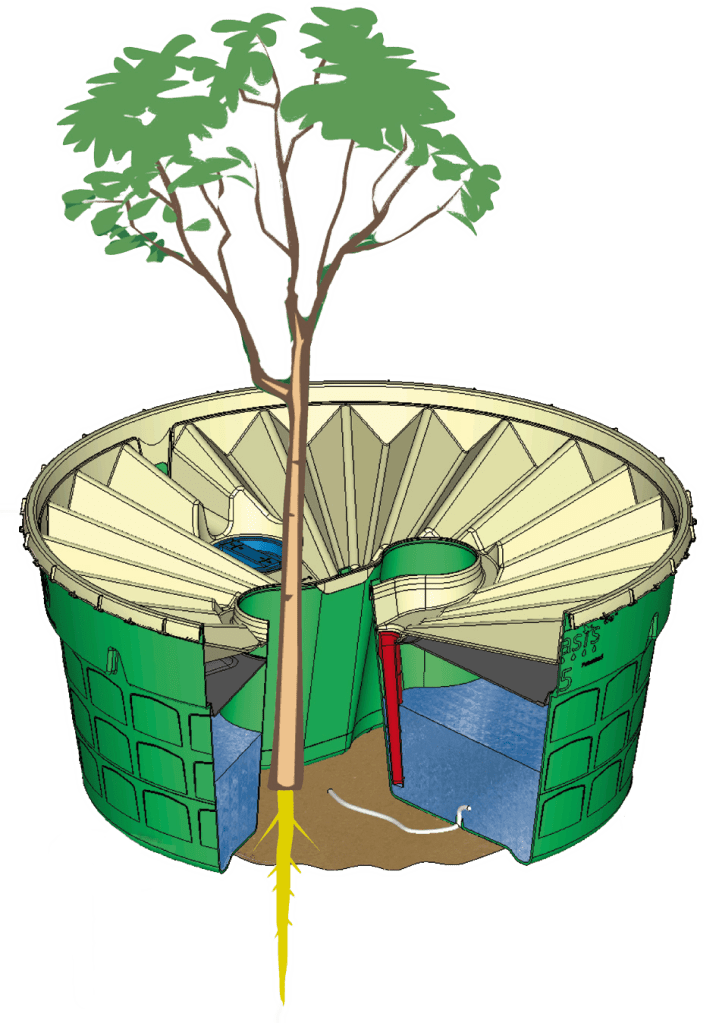
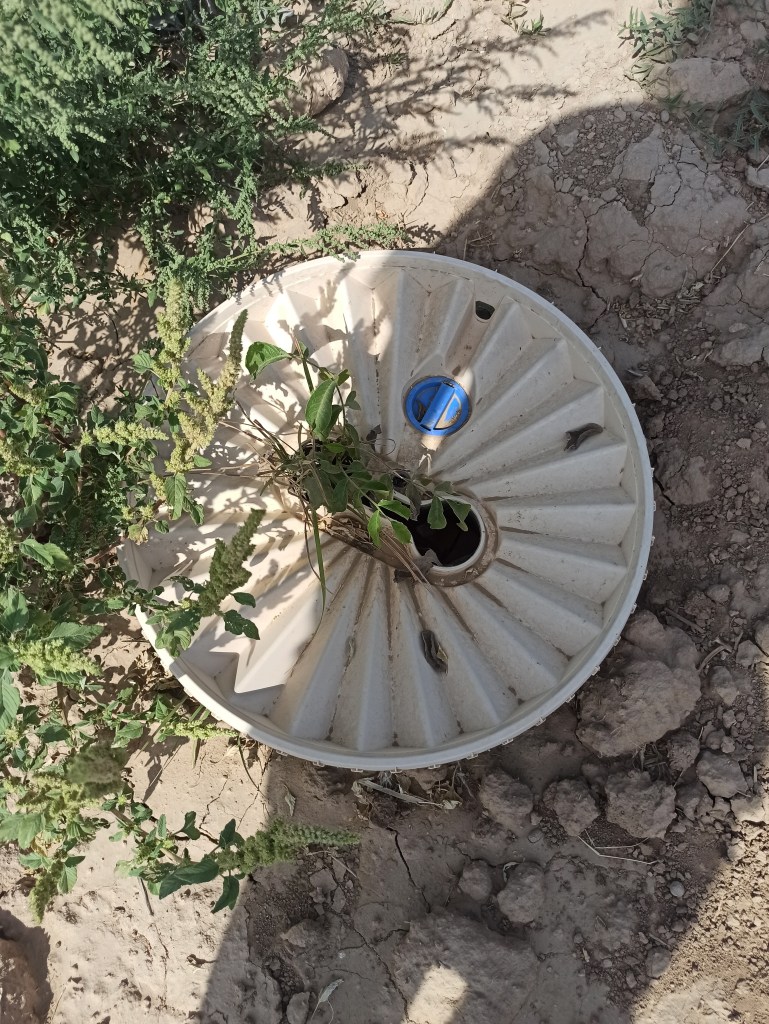
But back to our topic. The technology of Waterboxx is actively piloted in the world. In fact, it is a plastic (reusable) or biomass (biodegradable) box, with a hole for a seedling in the middle. Water is poured into the box. Out of the box, a synthetic lace comes out from the bottom, which, when filling the box with water, begins to transfer moisture from the box to the external environment, i.e. a sort of small dripper in the bottom of the box. Thus, water is very slowly supplied to the root zone of the seedling. From above, the Waterboxx is closed with a corrugated lid, with ribs. Condensed moisture, or precipitation, if any, also flows down these ribs into the box.
This technology was developed by Groasis specifically for landscaping arid areas. By planting a seedling of the desired type (remember, it is the species that is adapted for this territory), and placing a water box on top, filling it with water (in our case, it holds 17 liters), you actually provide the seedling with moisture for a very long hot period, and thus greatly increase its chances of survival. After the seedling has taken root, if it is of the type that is adapted to the given conditions, you can remove the water box and use it to plant the next seedlings.
That is why it is important to plant as many trees as possible. But don’t just plant. One of the most important things is not just to plant a tree, but to make it grow to an adult state. Of course, it is good when there are conditions and someone who will constantly water the planted tree. But this is often difficult, if not impossible. In our country, more than 80% of the territory is located in the arid zone, where you need to be especially considerate to each tree. And you need to create conditions so that each planted tree grows to an adult stage, when it does not require watering. It is clear that it is necessary to plant exactly those species that can grow in a given area and in given climatic conditions. We agree, is it not stupid to plant fur trees or poplars in an arid zone? It’s just stupid. They won’t grow there. The first rule that we keep repeating to everyone who wants to plant a tree is: “Look at what is already growing or has historically grown in this area. And plant these species! An indicator of the presence of trees of this species indicates that it is already adapted to the conditions, and the likelihood is high that newly planted seedlings of the same species will also survive here.
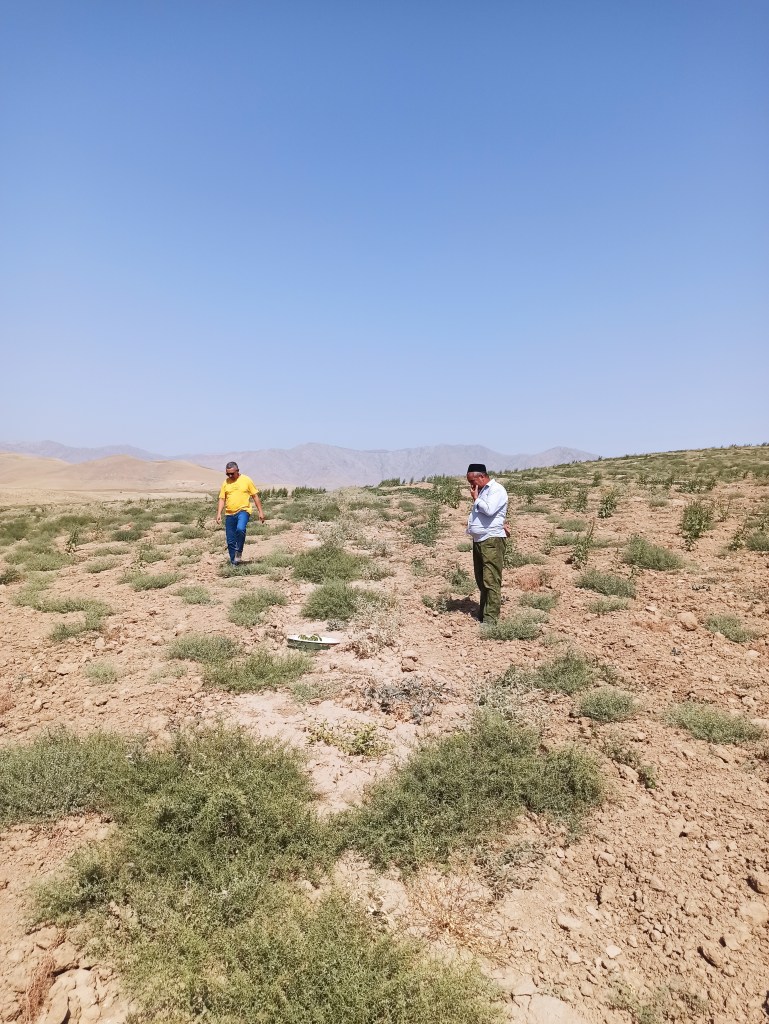
Figure 1. Waterboxx in section
The GEF SGP has approved two projects to see how this practice will help farmers in the arid regions of our country to increase the chances of the survival of planted trees. One of the projects is located in the Bakhmal district of the Jizzakh region, the second is in the Kitab district of the Kashkadarya region.
Our visit to the Bakhmal district did not give any results: the farmer did not have time to plant the planned seedlings. Will do it next year. But in the Kitab district there are results, and we want to share them with our readers.
So, the farmer’s name is Sharafiddin Musaev. His land is on very arid rainfed foothills.
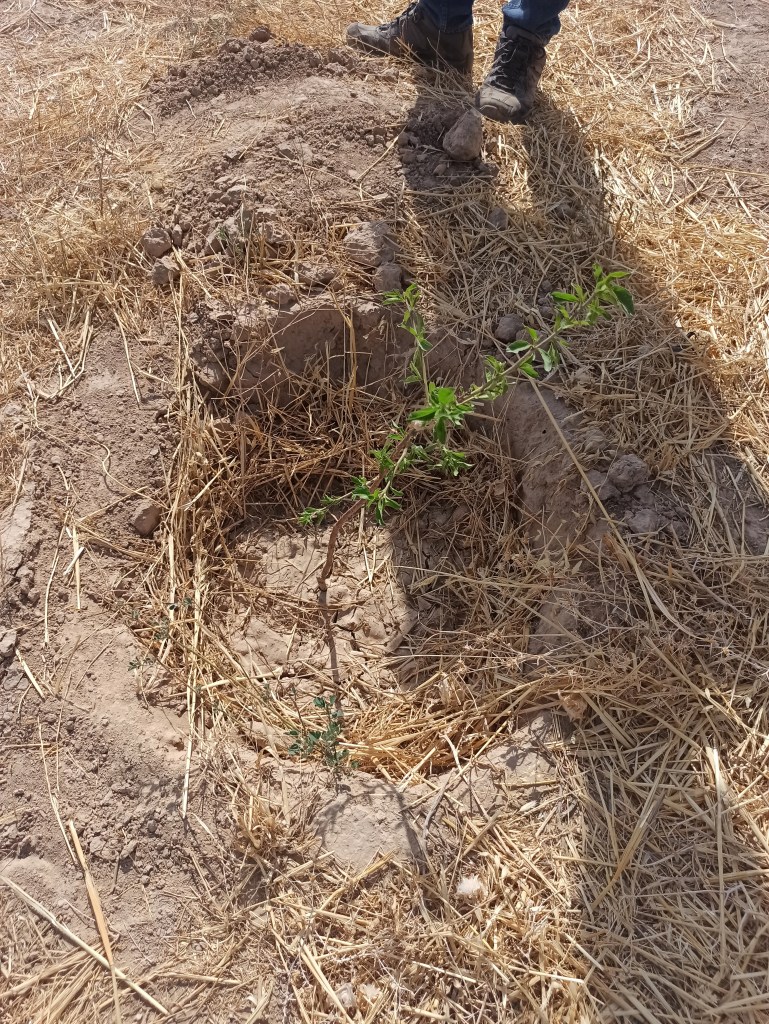
Photo of Sharafiddin-aka, and the water box (unfortunately, incorrectly installed, because the sides of the box were not covered, which did not prevent excessive evaporation)

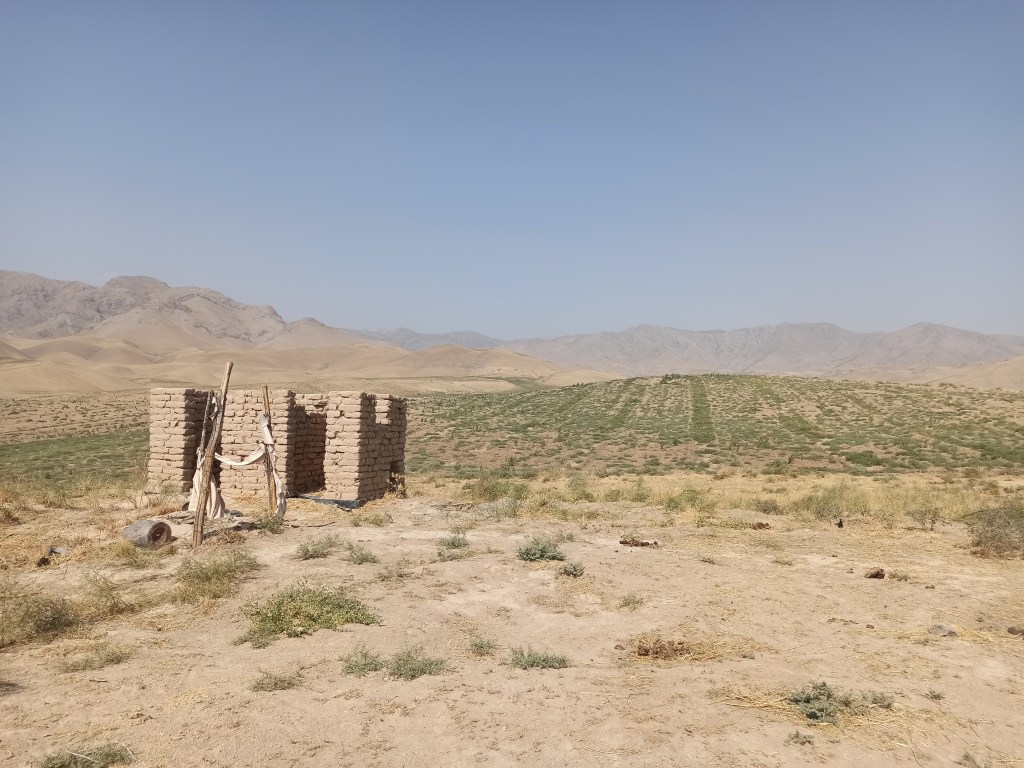
Lands of Sharafiddin-aka
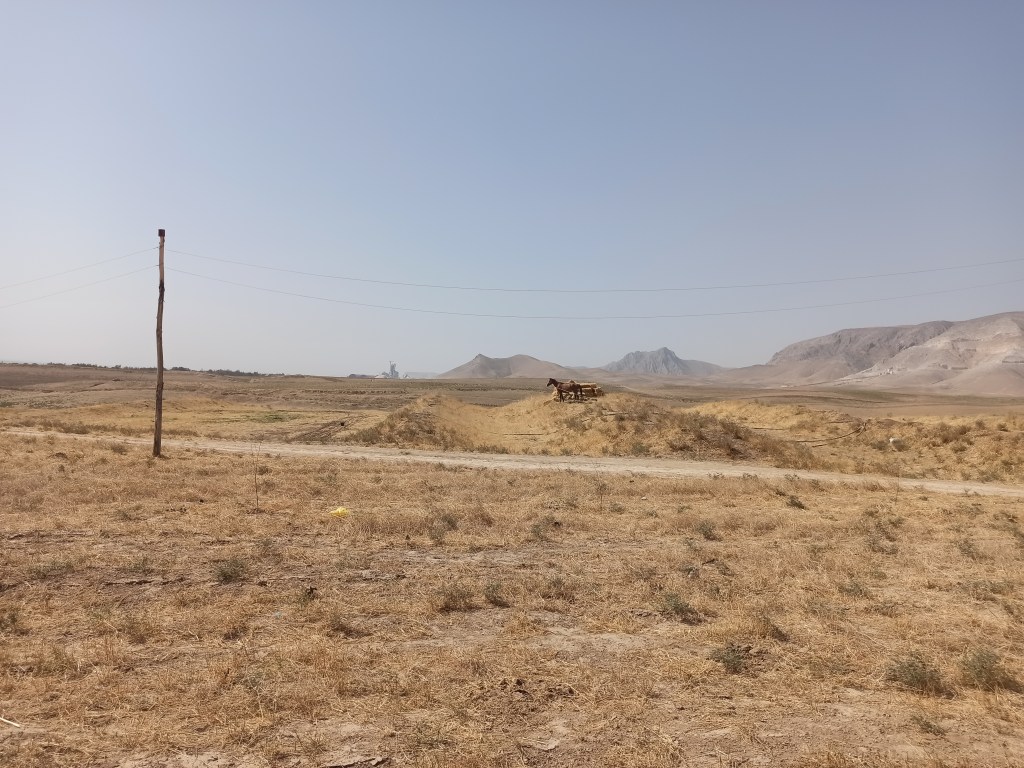

But see what kind of land he has and what kind of land is around.
There, in the distance, a cement plant is being built.
But you can understand what kind of climate and what kind of land it is by looking at the photo.
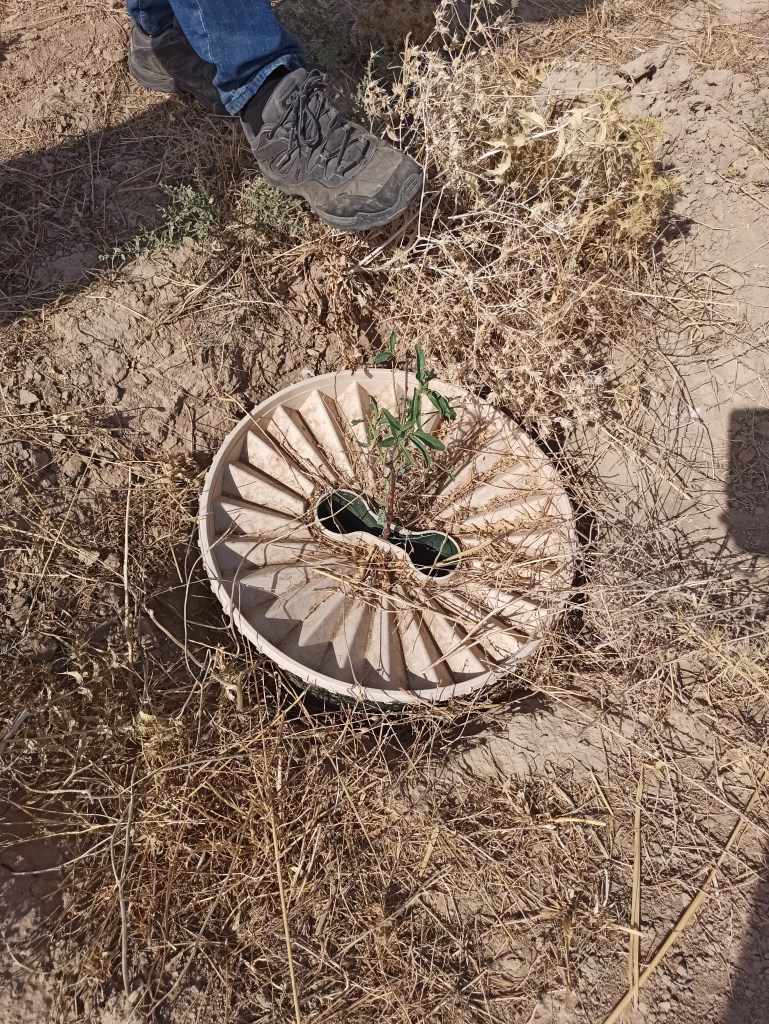
This is what the Waterboxx looks like. You see that the seedlings have taken root, although this is not the kind of tree that should grow here. More on that later. In this photo, walnut seedlings.
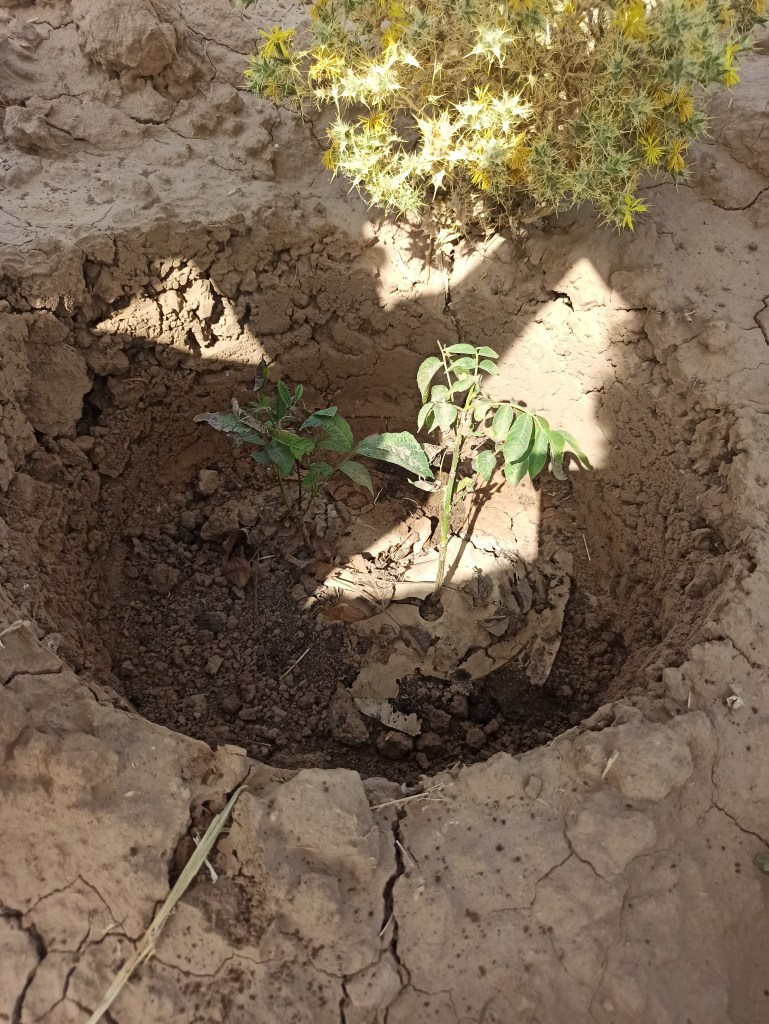
We lifted the box, and as you can see, the ground under the box is slightly damp, unlike the ground around. This moisture is enough for the seedling to grow.
You can also see that there is still water in the box. Sharofiddin-aka never filled the box, except for the first time. It has rained twice since planting. He topped up boxes with water a few times, and not because the boxes ran out of water, but simply to be on the safe side.

Unfortunately, it must be said that Sharofiddin-aka did not consult with the foresters and did not follow the advice to plant drought-resistant tree species. After all, after the boxes are removed, the young tree will still have to survive in these harsh conditions. Without abundant watering, moisture-loving crops will not survive here.
Sharafiddin-aka, planted 1200 seedlings:
400 almonds, 400 walnuts, and 400 cherry trees.
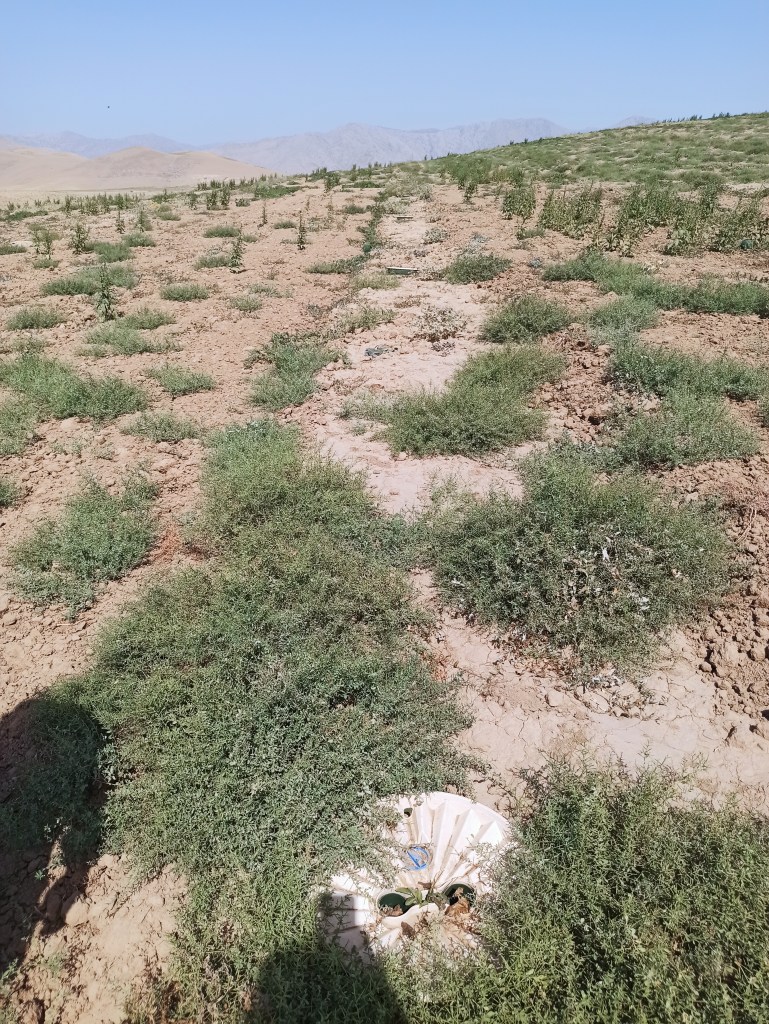
He thought that since cherry grows below, in the village, it will grow here, at the top of the hill. But in the village, in the courtyards, people are constantly watering the trees, and there, thanks to buildings, other plants, there is much more moisture in the soil than on an open hill. Walnut is also a very moisture-loving plant, and cannot grow in dry conditions. Do not plant walnut in dry conditions. It’s just not wise. Here, notice where the walnut grows in the wild itself. It grows on the northern slopes, where there is more moisture. So this is its comfortable habitat. It is not intended for dry open areas. But what was planted was planted.
From the results:
Of the 400 cherry seedlings planted, not a single one survived. Walnut – half survived – 200 pcs. But almonds, which are quite drought-resistant, showed a better result – 300 seedlings survived, i.e. 75%.
We suggest Sharofiddin-aka to plant almonds and pistachios, as the most suitable crops for this area and climate. Let’s see how he follows our advice.
Next year, we’ll see how things go with the Bakhmal project. We will keep you updated.
You can read the original version of this publication here: https://sgp.uz/ru/rabotajut-li-vodnye-korobki-water-box/

 Green Light Deserts LTD